The problem came from operating parking lots
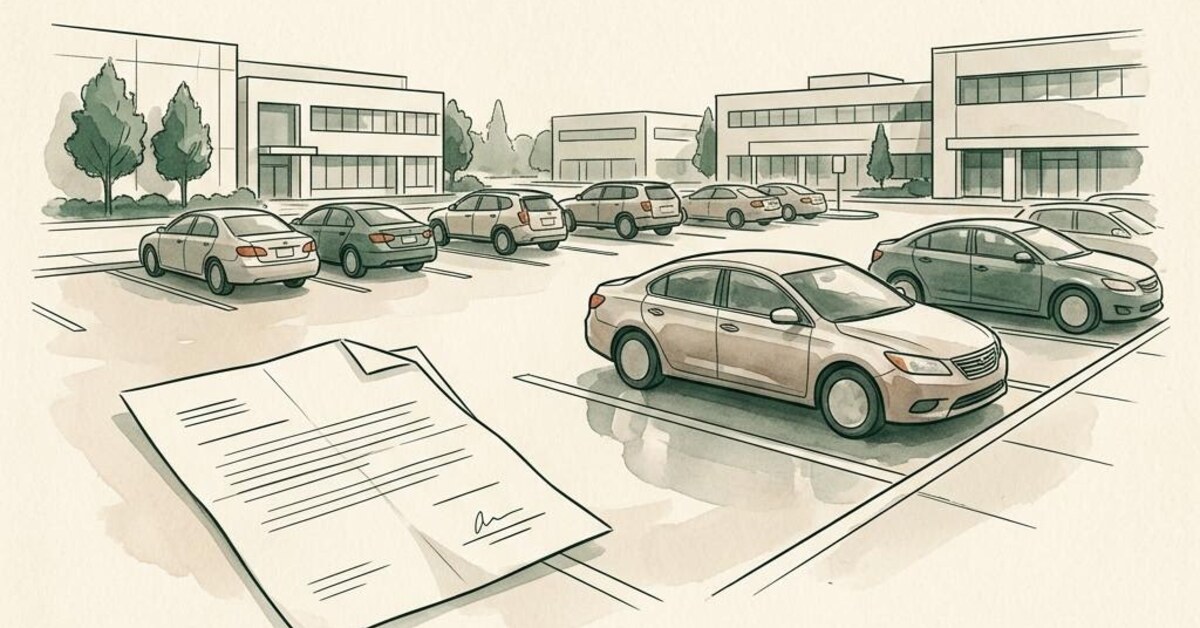
My first issued patent began with a problem I saw running parking lots: vehicles backing into people and property. I was working on a place people used every day. That made the problem hard to ignore.
A parking lot brings vehicles and people into the same space. Drivers arrive, leave and reverse while other people walk through it. I wanted to work on the backing movement because that was the problem in front of me.
I did not start by looking for an invention category. I started with a question about the operation: how do we reduce backing collisions? That question became the basis of my vehicular backup safety system.
The connection to the business mattered to me. I wanted to spend time on a problem I understood from operating parking, rather than choose an idea because it sounded impressive. I would make that choice again.
The filing and the issued patent
I filed the nonprovisional application on January 28, 2024, with a registered patent agent. The idea had become work that I was prepared to pursue beyond the parking lot.
Working with a patent agent gave me a way to take an operating problem into the filing process. My part began with explaining the problem and the invention. That required more than saying that backing collisions were bad.
The application went through prosecution and allowance. U.S. Patent 12,741,586 issued on September 22, 2026, about 32 months after I filed. It covers a system to reduce backing collisions in parking and operating environments.
Those two dates are the clearest account of the time involved. I filed in January 2024 and received the issued patent in September 2026. For an operator used to solving today's problems, that is a different schedule.
What the wait taught me
The 32 months changed how I think about the commitment behind a filing. Submitting an application is one decision. Staying prepared for the work that follows is another.
I would budget for the full process again, rather than treat the initial filing as the entire expense. I would also keep time available for decisions about the application. A business does not stop needing attention while an invention is under review.
I learned to judge this work against the problem that started it. The point was a system to reduce backing collisions. Keeping that purpose clear matters more to me than making the process sound complicated.
The issued patent gave me a concrete result after that wait. It also gave me a better basis for deciding where to spend my next hour and dollar on invention work.
The work beyond the first issuance
I now have one issued U.S. patent and 25 other applications pending. That includes three other nonprovisional applications from 2024 and 22 provisional applications filed from April through October 2026.
My operating work keeps presenting questions about parking, charging, access and safety. Those questions connect to the applications in my portfolio. The first issuance did not change where I look for problems.
I still want a clear connection between an invention and a place where it can be used. A parking operator has to think about drivers, payments, equipment and people moving through a site. That gives me specific problems to work on.
I do not measure the value of the work by the filing count alone. I ask what problem each proposed solution addresses and why that problem deserves time. That is the standard I would use again.
File the problem you see every day
My advice to another operator starts with observation. Write down what happens, who is affected and where the operation breaks down. Use the words you would use to explain it to someone working beside you.
Then describe your proposed solution. I want to be able to explain what I am trying to change before I spend money on a filing. That keeps the conversation with a patent professional focused.
I would bring that written explanation to a registered patent agent early. I would bring the details of the invention, not a sales pitch. The operating problem should remain clear throughout the discussion.
Consider a provisional first
For a new idea, I would discuss a provisional application first with my patent professional. I want a plan for the initial filing and the decisions that follow it.
My backup-safety application was filed as a nonprovisional on January 28, 2024. That is the path I took for this invention. My advice for the next idea is to decide the filing plan before spending on it.
Budget for prosecution, not just submission
I would ask for a budget that extends beyond preparing and submitting the application. I would ask what work requires my attention and what decisions require more money. I would keep those questions attached to the filing plan.
That is one lesson I take from the 32 months between filing and issuance. I need room for invention work alongside the daily responsibilities of running a business.
Spend on filings you can use
I would keep choosing problems tied to operations I understand. I would keep working with a registered patent agent. And I would keep asking where the invention belongs in the business.
My first issued patent started with vehicles backing into people and property. I followed that problem through a January 2024 filing to a September 2026 issuance. That is the part I would repeat: start with the problem in front of me, explain the solution clearly and commit to the work.
Frequently asked questions
What does the issued patent cover?
It covers a vehicular backup safety system to reduce backing collisions in parking and operating environments.
Did this application start with a provisional?
I filed the nonprovisional application on January 28, 2024, with a registered patent agent.
Are the other 25 applications issued patents?
No. My portfolio has one issued U.S. patent and 25 pending applications.