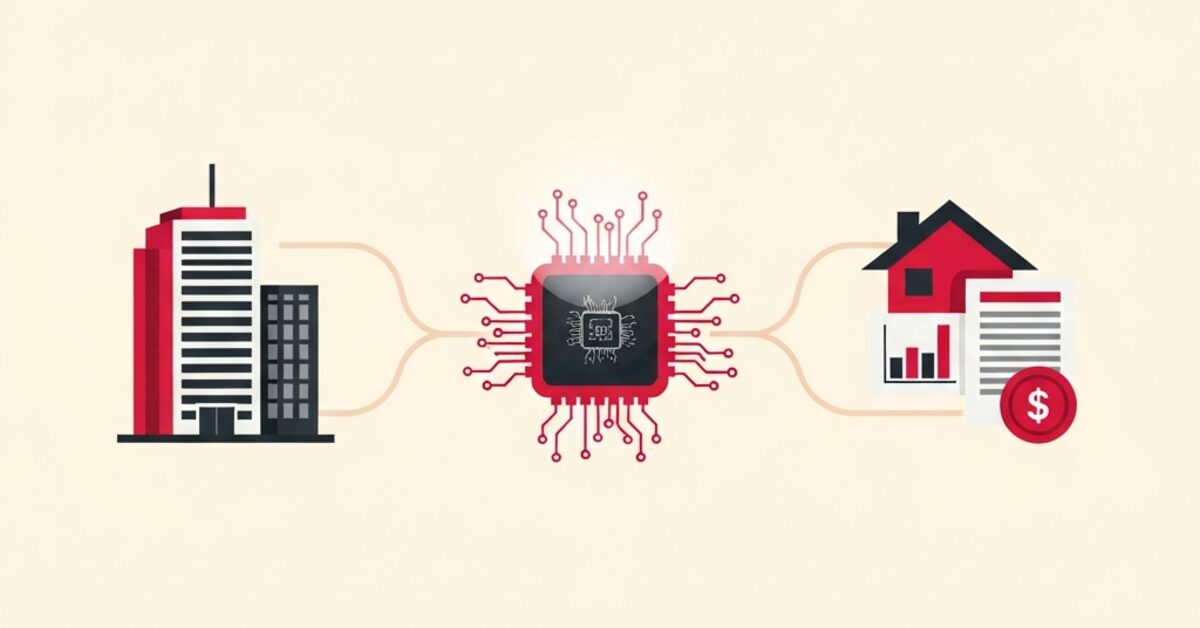
Underwriting has always been the same act: estimate the cash flows, price the risk, and decide whether the return justifies the capital. What changes with AI is not the question but the speed, breadth, and traceability of the answer. Done well, AI compresses a multi-week diligence cycle into a same-day decision and makes that decision auditable. Done poorly, it laminates a confident-looking number over the same bad assumptions that always sank deals.
From a static memo to a living decision
The traditional deal memo is a snapshot: an analyst pulls comps, builds a model, writes a narrative, and it is frozen the moment it is printed. AI lets underwriting become a living object that updates as rents, rates, costs, and absorption move. Instead of revisiting a deal quarterly, the underwriting refreshes itself and flags when an assumption has drifted far enough to change the decision. This is the shift from dirt and gut to data and decisions.
What AI actually does well here
- Ingests messy, unstructured inputs. Rent rolls, T-12s, leases, offering memoranda, inspection reports — AI reads the documents humans used to re-key by hand, and extracts the line items into a model.
- Builds and stress-tests the model. It can generate a base case and run hundreds of scenarios — rate shocks, vacancy spikes, capex overruns — far faster than an analyst toggling cells.
- Surfaces comparable evidence. It pulls and ranks comps with explanations, instead of an analyst quietly choosing the three that support the thesis.
- Writes the first draft of the narrative. The memo prose — the part that consumes a junior analyst's week — becomes a review task, not a writing task.
The real constraint moves to data quality
Here is the part most teams underestimate. Once AI removes the analyst-hours bottleneck, the binding constraint becomes the quality of the data feeding it. I call the hidden cost of bad data the Dirty Data Tax: every mislabeled unit, stale rent, duplicated record, and unreconciled expense gets silently priced into the decision. A human analyst working slowly often catches these by feel. An AI working quickly propagates them at scale and presents the result with a clean, persuasive interface.
The danger of AI underwriting is not that it is wrong. It is that it is wrong confidently and fast, on inputs no one re-checked.
So the first ROI of AI in underwriting is not the model — it is the cleanup. Standardize the chart of accounts, reconcile the rent roll to the bank, deduplicate the comp set, and version your assumptions. Firms that do this convert AI from a liability generator into a genuine edge.
Keep a human on the risk decision
Faster does not mean unsupervised. Underwriting is exactly the kind of high-consequence decision that needs a Human Review Rule: the AI can assemble, model, and recommend, but a named human signs the risk call above a defined threshold. The goal is leverage on the 90% of mechanical work so judgment concentrates on the 10% that actually moves the outcome.
What changes for the operator
- Speed becomes a competitive weapon. A credible same-day underwrite lets you bid faster and with more conviction than a firm still scheduling its analysts.
- Coverage expands. You can underwrite the deals you used to pass on for lack of time, widening the funnel without widening headcount.
- Discipline gets cheaper. Consistent, versioned assumptions across every deal make portfolio-level risk legible in a way spreadsheets never were.
Make data confidence a number, not a vibe
The fastest way to keep an AI underwriter honest is to make it declare how much it trusts its own inputs. Before the model outputs a cap rate or a recommendation, it should output a data-confidence score: what fraction of the rent roll reconciled to the bank, how many expense lines were inferred rather than sourced, how stale the comps are, and how many assumptions came from a document versus a guess. A deal that pencils beautifully on 60%-confidence data is not a deal you have underwritten — it is a deal you have decorated.
This does two things. First, it makes the Dirty Data Tax visible at the moment of decision instead of after the loss. A reviewer can glance at a confidence score and know whether to trust the same-day answer or send it back for cleanup. Second, it changes behavior upstream: once teams see that low-confidence inputs block the fast path, they start fixing the source data — reconciling the rent roll, standardizing the chart of accounts, versioning assumptions — because clean data is what buys them speed.
The firms that win with AI underwriting are not the ones with the cleverest model. They are the ones that treat data quality as a measured, managed input rather than an article of faith. Speed is the prize, but confidence is the toll you pay to keep it.
The takeaway
AI does not replace the underwriter; it relocates the underwriter's value from data assembly to judgment and from one-time memos to continuous oversight. But the leverage only shows up if the data underneath is clean. Pay down the Dirty Data Tax first, keep a human on the risk decision, and AI turns underwriting into the fastest, most defensible function in the firm.