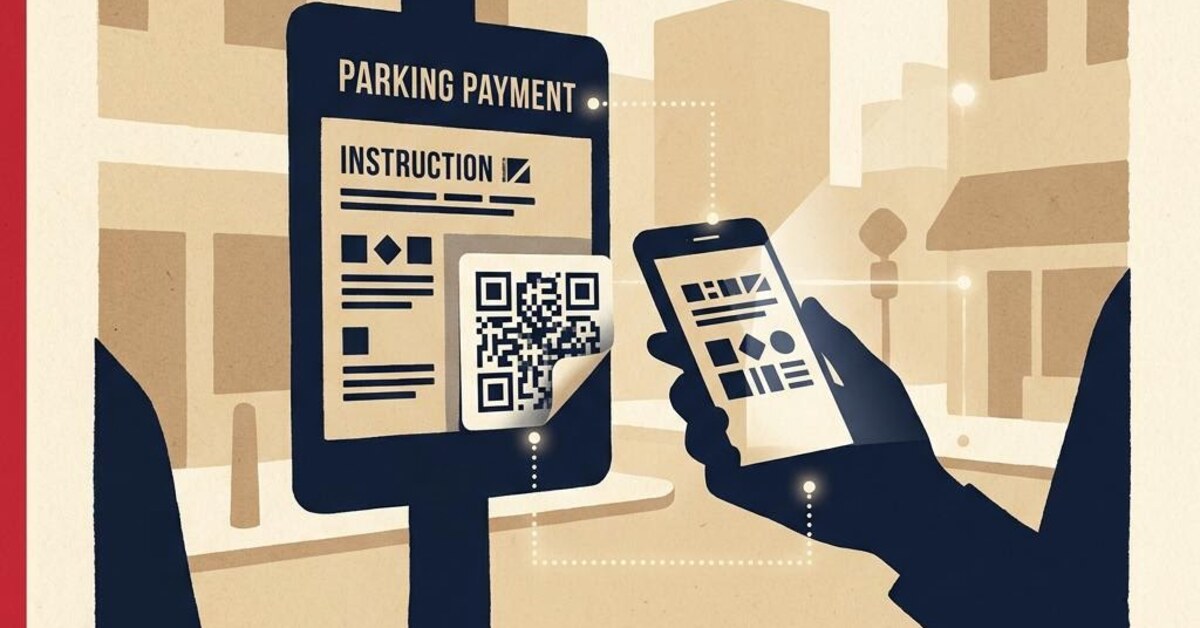
I see two separate questions in a parking payment dispute. Did the driver try to pay, and did the operator receive that payment? A counterfeit code can make those answers different.
I check what the driver was told to do before deciding what a missing payment means. If a sticker redirected the money, the operator needs to fix the sign and review the notice together.
The sign redirects the payment
The physical setup is simple. A driver expects the code on a parking sign to belong to the operator. A replacement sticker uses that expectation to direct the driver somewhere else.
The driver scans the replacement and sees a payment destination. If the driver pays the scammer, the legitimate operator has no corresponding payment. An enforcement process that checks only its own receipts misses what happened at the sign.
The FTC's December 2023 consumer alert warns about scammers covering QR codes on parking meters. Spoofed payment sites can also collect information a visitor enters. The driver faces a risk to the payment and to information supplied during the transaction.
What I would check before paying
Look at the physical sign before opening the payment page. Sticker edges, a raised layer or a code placed over other printing are reasons to stop and check. They are not the only possible signs of a problem.
An intact sticker is not proof of authenticity. A neat-looking code can still send a visitor to the wrong destination. I would not ask a driver to decide that a payment page is safe from appearance alone.
Preview the address before opening it. The FTC recommends inspecting the URL for misspellings or a switched letter. Compare the destination with operator details obtained independently, not just another detail on the same suspicious sticker.
Stop if the page requests an unrelated password or unusual personal information. Verify the destination independently, even if the logo looks familiar.
If the destination does not match, use an independently verified way to contact the operator. Do not rely on the suspicious page to provide the number that supposedly confirms it. Keep the payment decision separate from the pressure to finish quickly.
What a driver should preserve
If a payment has already been made, I would preserve the receipt and destination address. I would also record the parking location and time. A photograph of the sign, taken safely, gives the operator something specific to inspect.
Send those records through verified operator contact details and ask for a review. Match the receipt to the vehicle, location and parking period. A payment to the wrong destination still leaves evidence of what the driver tried to do.
The operator should inspect before escalating
Park Graph checks that the original sign is in place before any notice goes out. I want the sign inspection connected to the payment record for the stay. The operator needs both before deciding how to handle the missing payment.
I would want a reported counterfeit sign inspected and the finding recorded. The operator should identify which payment destination was displayed. Replacing the sticker without preserving that information leaves the original dispute harder to resolve.
Check other disputes involving the same sign. Compare the dates and payment destinations. A repeated mismatch gives the operator a specific place and period to investigate.
The response should include a clear way for the driver to submit evidence. A driver should not have to explain the same event repeatedly to separate teams. I would assign responsibility for reviewing the sign and the notice together.
Give each real code an identity
My October 20, 2026 patent-pending application addresses counterfeit payment codes for parking and EV charging. It assigns each printed code its own identifier. That makes the individual sign part of the investigation rather than treating every code at a property as interchangeable.
The proposed system compares payments with independent evidence that vehicles are present, including plate reads and charger states. A vehicle at the site and no payment through its genuine code create a mismatch worth checking.
The application includes flagging silent codes as counterfeit. Silence means the expected payment activity is missing from the real code. In an operating review, I would treat a flag as a reason to inspect the evidence, not as an excuse to skip it.
Protect the driver as well as the revenue
The proposed enforcement process spares drivers who paid a scammer. I want the reviewer to connect the payment attempt, the sign and the vehicle's presence. Those records should explain how the money went to the wrong recipient.
I want the system to ask the right question before a notice causes further harm. Did a counterfeit sign redirect a payment that the driver intended for this stay? Answering that requires the sign record and the driver's evidence together.
I would give the sign review and the payment dispute to people who can work from the same evidence. Inspecting the sticker without reviewing the notice leaves the driver waiting. Reviewing the payment without inspecting the sign leaves the diversion unresolved.
Make authenticity an operating responsibility
I do not put the entire burden on the person holding the phone. Drivers should inspect URLs and stop at warning signs. Operators should maintain signs and provide a credible review process when those signs are questioned.
Drivers can inspect the URL before opening it. Operators can examine the sign and review a disputed payment. Both checks matter.
Connect the physical sign, the vehicle's presence and the payment review. Do not assume that a missing receipt proves deliberate nonpayment. Establish what the driver was shown before deciding what happens next.
Frequently asked questions
Does an intact sticker prove a parking QR code is real?
No. Sticker edges are a warning sign, not an authenticity test. Check the destination address against an independently verified operator website before entering payment details.
What does Park Graph check before a notice?
Park Graph checks that the original sign is in place before any notice goes out.
What should I keep if I paid through a suspicious code?
Keep the receipt, payment destination, parking location and time, and a photograph of the sign if safe. Contact the operator through independently verified details and ask for review.