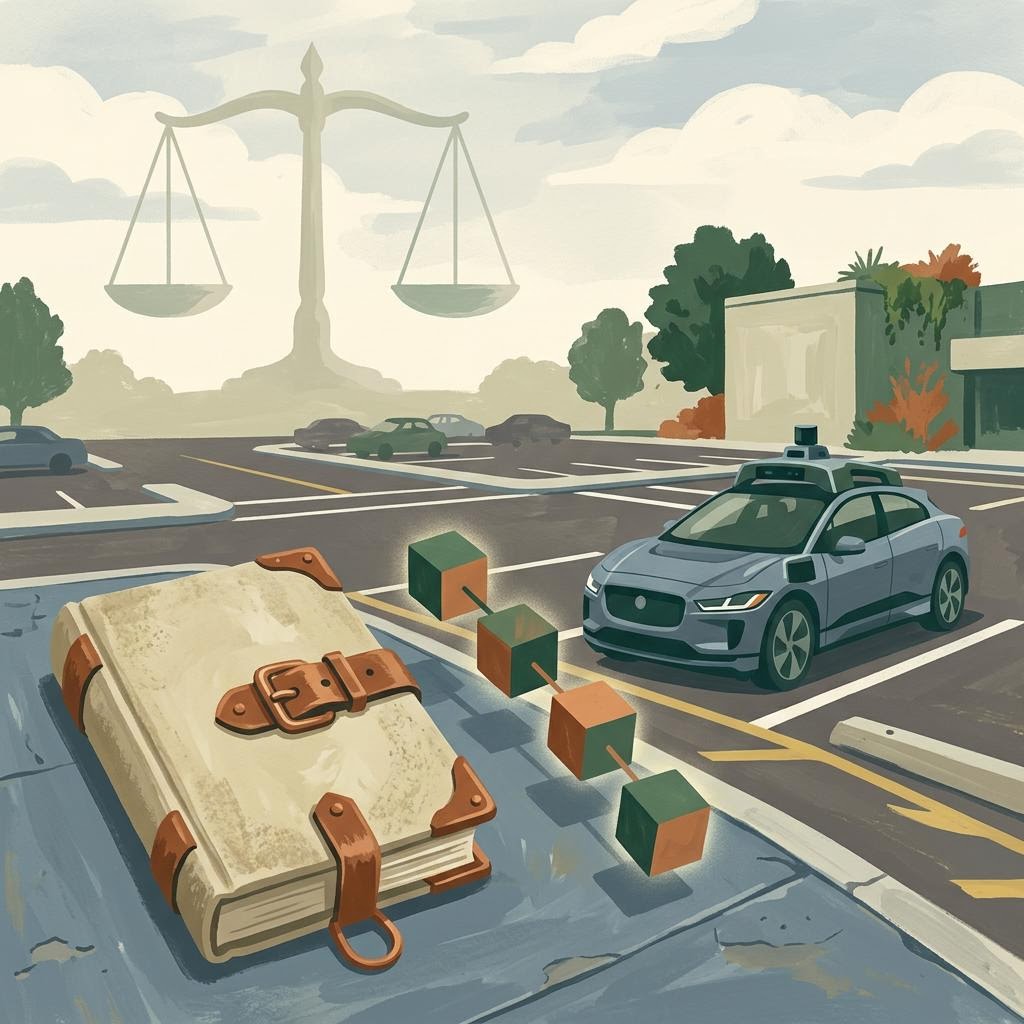
When a robotaxi crashes, the fleet operator often holds the most complete record of what happened. The rider, the other driver and the property owner may hold far less. The fix is a shared evidence record that is captured at the time, sealed against later changes and available to each party with a legitimate claim.
I am a lawyer by training and an inventor by habit. My legal work included SEC Enforcement experience, which taught me to ask two questions first: who has the record, and can you trust it? Driverless cars raise that question every time something goes wrong.
Who holds the data today
A modern car records a lot. Cameras, sensors, location, speed and software state. In a driverless car, much of it goes to the fleet operator. That makes sense for running a fleet. It is a problem after a crash, because the party with the most data is also a party to the dispute.
The other people involved have less. A human driver may have a dashcam. A parking-lot owner may have a camera on a pole. A pedestrian has a phone, maybe. Their records are partial, timed differently and easy to challenge.
What a good record looks like
A useful evidence record has four properties.
It is captured at the time. Data written down minutes after an event is stronger than data reconstructed weeks later.
It shows if it was changed. Each entry carries a cryptographic fingerprint linked to the one before it. If someone edits an entry, the chain breaks and anyone can see it. That is tamper evidence. It does not stop editing. It makes editing visible.
It ties to place and permission. On private property, the record should show whether the car was allowed in the space, which stall it used and what instructions the site gave it.
It can be shared on terms. Insurers, owners and riders need access to the parts that concern them, without handing the whole fleet log to everyone.
My pending application on an AV digital evidence recorder addresses that kind of record on private property. A related pending filing covers a verified cargo handoff, which records who opened a compartment and when. Another covers authenticated markers and space credentials, so a car can show it read a real sign and held a right to the space.
What insurers and courts may do with it
I will not predict how a court will rule on any particular record. Admissibility depends on the rules of evidence in each court, the facts and how the record was kept. What I can say is narrower.
A carrier that can see a sealed, timed record of a crash has more to work with when it reviews a claim. A clear record can narrow what the parties argue about, whatever the outcome.
Courts already deal with electronic records every day. They ask who made the record, how it was stored and whether it changed. A record designed to answer those questions from the start is easier to explain than one pulled together afterward.
Where crashes will happen
Some robotaxi incidents may happen at low speed on private property: pickup zones, garages, charging depots and airport curbs. Those are places where the property owner has cameras, gates and rules, and where the owner can be drawn into a claim.
That gives owners a reason to act. If you let driverless cars use your lot, decide now what you will record, how long you will keep it and who can see it. Put it in the agreement with the fleet.
What to keep in writing
If you are a property owner working with a robotaxi fleet, get these in writing: what data the fleet records on your property, how long it keeps it, how you can request it after an incident, and who pays for any damage while the claim is open.
If you are a rider, keep your trip receipt, take photos if it is safe and write down the time. Ask the fleet in writing to preserve the data for your trip.
If you are an insurer, ask fleets and property owners how their records are sealed and how long they are kept.
Responsibility needs a name
My book Agent of Record makes one argument for AI agents that applies here too: every system that acts for someone needs a named party who answers for it. A robotaxi is an agent that drives. When it gets something wrong, someone has to stand behind it, and the record has to show what it was told to do.
Wins Parking designs and manages parking, including sites where driverless cars can charge and wait. Evidence is part of that design now, the same as lighting and drainage.
The pending filings I mentioned are applications, not issued patents. The problem they address is already here.
Frequently asked questions
Will courts accept a sealed evidence record?
Admissibility depends on each court's rules and the facts. A record kept with clear authorship, storage and change history is easier to explain.
What is tamper evidence?
Each entry carries a cryptographic fingerprint linked to the one before it. An edit breaks the chain, so the change is visible.
What should a rider do after a robotaxi incident?
Keep the trip receipt, take photos if safe, note the time, and ask the fleet in writing to preserve the trip data.